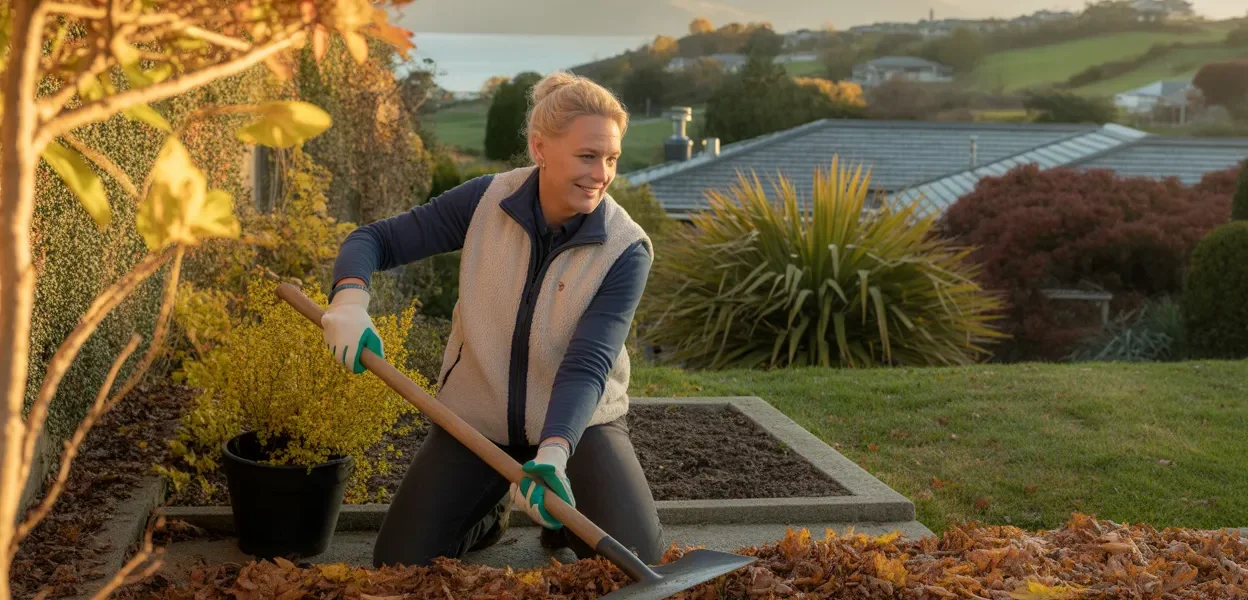
As Kapiti Coast’s vibrant autumn colours emerge and temperatures begin their gentle decline, savvy homeowners recognise this season as critical for landscape preparation. Whilst your neighbours might retreat indoors assuming gardening season has ended, experienced property owners understand that autumn landscaping Kapiti Coast properties demands specific attention – tasks completed now prevent expensive winter damage whilst setting the stage for spectacular spring growth.
The unique challenges of our coastal location – persistent winds, sandy soils prone to winter waterlogging, and the transition from dry summer to Wellington’s notoriously wet winter months – make autumn preparation particularly crucial. Unlike inland regions where seasonal transitions occur gradually, Kapiti properties face dramatic shifts requiring proactive management. Additionally, autumn’s mild temperatures and increasing rainfall create ideal conditions for certain landscaping tasks that become impossible or far more expensive once winter’s full force arrives.
This comprehensive guide walks you through essential autumn landscaping tasks specifically tailored to Paraparaumu, Waikanae, and Kapiti Coast conditions. From drainage improvements that prevent winter bog situations to strategic planting that leverages autumn’s perfect establishment conditions, we’ll cover everything you need to accomplish before winter arrives. Whether you’re managing a sloping section in Raumati Beach or a coastal property in Paekakariki, understanding which tasks demand immediate attention versus what can wait ensures your landscape investment remains protected through the challenging months ahead.
Key Takeaways
- Autumn provides a critical 8-12 week window (March-May) for essential landscape tasks before winter conditions make outdoor work impractical or significantly more expensive
- Drainage improvements completed in autumn prevent winter waterlogging that damages lawns, gardens, and structures – waiting until winter creates muddy, inefficient installations
- Native trees and shrubs planted in autumn develop strong root systems over winter, establishing far better than spring-planted specimens whilst requiring minimal irrigation
- Retaining wall and hardscaping projects scheduled now avoid winter weather delays and capture off-peak contractor pricing (typically 10-20% lower than peak season)
- Soil preparation and mulching in autumn protects plant roots from frost, improves soil structure through winter decomposition, and reduces spring weed pressure
- Lawn renovation tasks (aeration, overseeding, top-dressing) deliver superior results in autumn compared to spring due to warm soil and increasing rainfall
- Winter project planning and bookings made in autumn secure preferred contractor schedules and avoid the spring rush when quality landscapers book out 3-4 months ahead
- Gutters, drains, and stormwater systems require autumn cleaning to handle Kapiti’s winter rainfall without overflow damage to landscaping and structures
- Pruning deciduous trees and clearing garden debris now reduces winter storm damage risks and eliminates pest/disease harbours over dormant months
- Kapiti Coast’s sandy soils and coastal exposure demand specific autumn preparations that differ from inland Wellington or other New Zealand regions
Understanding Kapiti Coast’s Autumn Landscape Challenges

Before diving into specific tasks, understanding why autumn landscaping Kapiti Coast properties requires particular attention helps prioritise your efforts effectively. Our region presents distinctive seasonal challenges that don’t apply equally across New Zealand.
Rapid Seasonal Transition characterises Kapiti’s autumn pattern. Unlike gradual temperature declines experienced inland, our coastal location shifts relatively quickly from settled summer conditions to winter’s wind and rain. This compressed transition period – typically 8-12 weeks from mid-March through May – demands efficient task completion before conditions deteriorate. Consequently, procrastination proves far more costly here than in regions with gentler seasonal shifts.
Sandy Coastal Soils create specific autumn management requirements. Whilst these free-draining soils perform excellently during dry months, winter’s persistent rainfall can overwhelm their capacity, particularly in areas with high water tables or impeded drainage. Moreover, sandy soils lose nutrients rapidly through winter leaching, making autumn soil enrichment particularly valuable. These characteristics mean drainage assessment and soil preparation rank higher priority for Kapiti properties than many other regions.
Wind Exposure intensifies during autumn and winter months. Prevailing westerlies and northwesterlies strengthen as weather patterns shift, placing enormous stress on plants, structures, and soil surfaces. Autumn tasks like staking newly planted trees, securing loose elements, and establishing wind-tolerant groundcovers prevent winter damage. Additionally, wind compounds moisture stress on evergreen plants during drier autumn periods before winter rains arrive.
Coastal Salt Exposure affects Kapiti properties year-round but intensifies with winter storms driving salt-laden spray inland. Plants weakened by summer stress or poorly established before winter suffer disproportionately from salt damage. Therefore, autumn preparation including protective mulching and strategic planting positions becomes critical for coastal landscape longevity.
Timing Considerations for Kapiti Coast
Optimal timing for autumn landscaping Kapiti Coast projects varies by specific task but generally follows this pattern: Early Autumn (mid-March to mid-April) suits major earthworks, retaining wall installations, and drought-tolerant plant establishment whilst soil remains warm. Mid-Autumn (mid-April to early May) provides perfect conditions for native tree planting, lawn renovation, and garden bed preparation as rainfall increases. Late Autumn (May) focuses on final preparations, winter protection installation, and planning/booking winter projects.
Understanding these timing nuances prevents the common mistake of attempting all autumn tasks simultaneously or, conversely, delaying critical work until conditions deteriorate.
Critical Drainage Improvements: Complete Before Winter Rains
Drainage work represents the single most important autumn landscaping task for Kapiti Coast properties. Winter’s persistent rainfall – often 150-250mm monthly from June through August – quickly exposes inadequate drainage, creating problems ranging from waterlogged lawns to structural damage.
Assessing Drainage Needs Now whilst ground conditions remain relatively dry allows accurate problem identification. Walk your property during or immediately after autumn rain, photographing areas where water pools, flows incorrectly, or drains slowly. These observations prove invaluable for planning drainage solutions because winter conditions make assessment impossible – everything becomes saturated, obscuring specific problem sources.
Common Kapiti drainage issues include surface water collecting against retaining walls or building foundations, lawn areas remaining soggy for days after rainfall, garden beds experiencing root rot from poor drainage, pathways and driveways developing puddles or washouts, and stormwater overwhelming existing systems during heavy downpours.
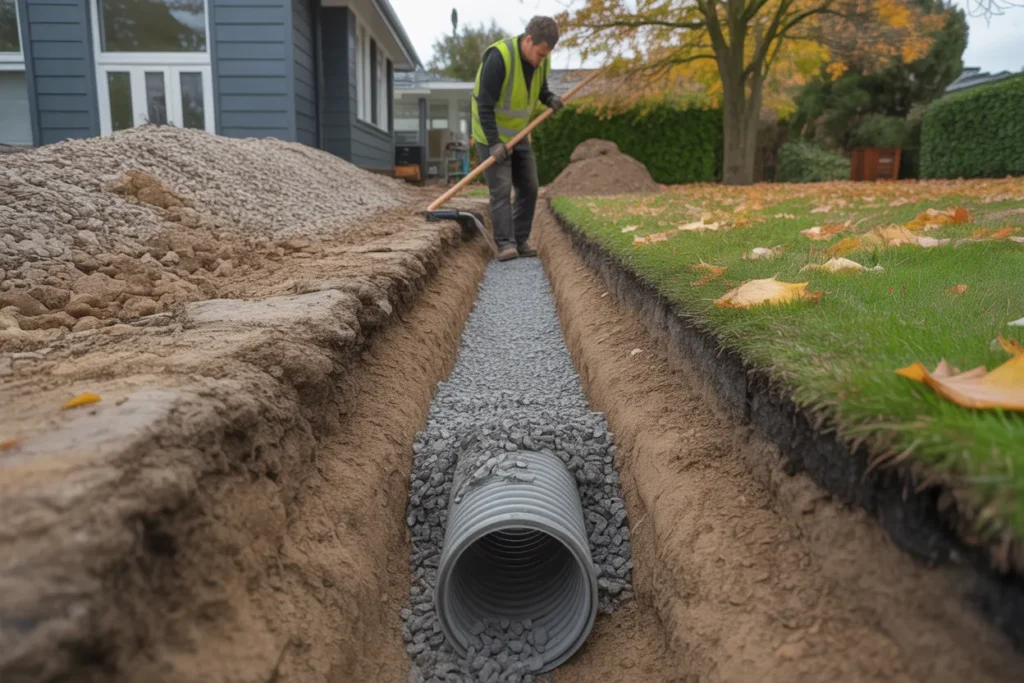
French Drains and Subsurface Solutions installed during autumn establish themselves before winter pressure arrives. These systems – perforated pipes surrounded by gravel in excavated trenches – intercept and redirect subsurface water away from problem areas. For Kapiti’s sandy soils, properly designed French drains prove extremely effective, though installation requires dry conditions for efficient excavation and material placement.
Typical French drain installations cost $80-$150 per linear metre depending on depth, pipe diameter, and site access. However, preventing winter damage to lawns, gardens, or structures easily justifies this investment. Furthermore, autumn installation allows systems to settle and prove themselves during first winter rains, permitting adjustments if necessary.
Surface Drainage Solutions address water flowing across lawns, driveways, or garden areas. These include strategic grading to direct water away from structures, channel drains across pathways or driveways, permeable paving replacing solid surfaces, and swales or bioretention areas managing stormwater naturally.
For sloping Kapiti sections, surface drainage design requires particular care. Poorly planned solutions simply redirect problems downhill to neighbouring properties or create erosion issues. Professional assessment ensures drainage improvements solve problems without creating new ones.
Why Autumn Timing Matters for Drainage
Attempting drainage installations during winter creates several problems. Firstly, saturated ground becomes difficult or impossible to excavate efficiently, dramatically increasing labour costs. Secondly, wet conditions prevent proper compaction of backfill materials, compromising long-term performance. Thirdly, muddy conditions damage surrounding lawns and gardens far more extensively than dry-season work. Finally, winter delays mean your drainage system isn’t operational when you actually need it.
Consequently, drainage work completed in autumn – even if rainfall reveals the need – proves far more cost-effective and successful than winter emergency repairs.
Strategic Autumn Planting: Leveraging Perfect Establishment Conditions
Contrary to common assumption, autumn ranks as the superior planting season for most Kapiti Coast landscape plants. The combination of warm soil, increasing rainfall, and reduced heat stress creates establishment conditions that spring simply cannot match.
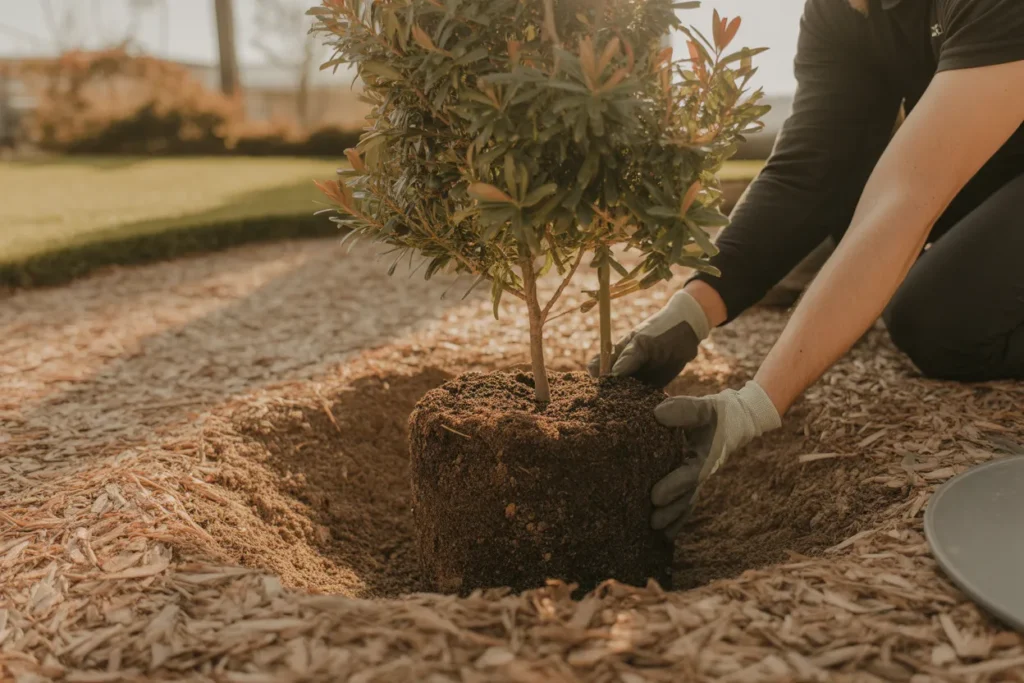
Native Trees and Shrubs planted during autumn develop extensive root systems throughout winter, emerging in spring as vigorous, established specimens requiring minimal irrigation. This contrasts dramatically with spring planting, which forces plants to establish roots whilst simultaneously supporting top growth during increasing heat and decreasing rainfall.
Excellent autumn planting choices for Kapiti include coastal specialists like Coprosma, Hebe, Pittosporum, and Olearia for exposed sites; larger natives like Pseudopanax, Griselinia, and Pittosporum for sheltering and structure; groundcovers including Muehlenbeckia and native Carex varieties; and feature trees such as Kowhai, Lemonwood, and Five Finger for established gardens.
When planting natives in autumn, ensure generous planting holes (at least twice root ball width), incorporate quality compost but avoid excessive fertiliser, mulch heavily around plants (75-100mm depth), and stake taller specimens against Kapiti’s winter winds. These preparations maximise establishment success whilst minimising maintenance requirements.
Hedging and Privacy Screens establish superbly from autumn planting. Species like Griselinia, Coprosma, and Pittosporum develop dense root systems over winter, producing vigorous spring growth that quickly fills gaps. For Kapiti properties requiring wind protection or privacy screening, autumn planting delivers results far faster than waiting for spring.
Hedging costs vary by species, size, and quantity, typically ranging from $15-$45 per plant for 1.5-2 metre specimens. Professional installation adds $25-$50 per plant including site preparation and planting. However, autumn establishment means hedges perform their intended function 6-12 months sooner than spring-planted alternatives.
Fruit Trees and Deciduous Ornamentals also benefit from autumn planting. Bare-rooted stock becomes available from late April, offering excellent value and superior establishment compared to container specimens. Popular choices for Kapiti gardens include apple, pear, and plum for edible fruit; citrus in sheltered positions (plant in late autumn for winter protection); and deciduous ornamentals like Japanese Maple, Silver Birch, and Liquidambar for seasonal colour.
Autumn vs Spring Planting Performance
Research consistently demonstrates autumn-planted natives establish 40-60% faster than spring equivalents, requiring 30-50% less irrigation during first summer, and showing superior drought tolerance in subsequent years. For Kapiti homeowners investing in landscape plants, autumn timing significantly improves return on investment whilst reducing ongoing maintenance demands.
Essential Lawn Care: Renovation and Winter Preparation
Autumn provides the optimal window for lawn renovation tasks that transform tired, patchy grass into dense, healthy turf. Kapiti lawns endure significant summer stress from wind, occasional drought, and heavy use, making autumn recovery work particularly valuable.
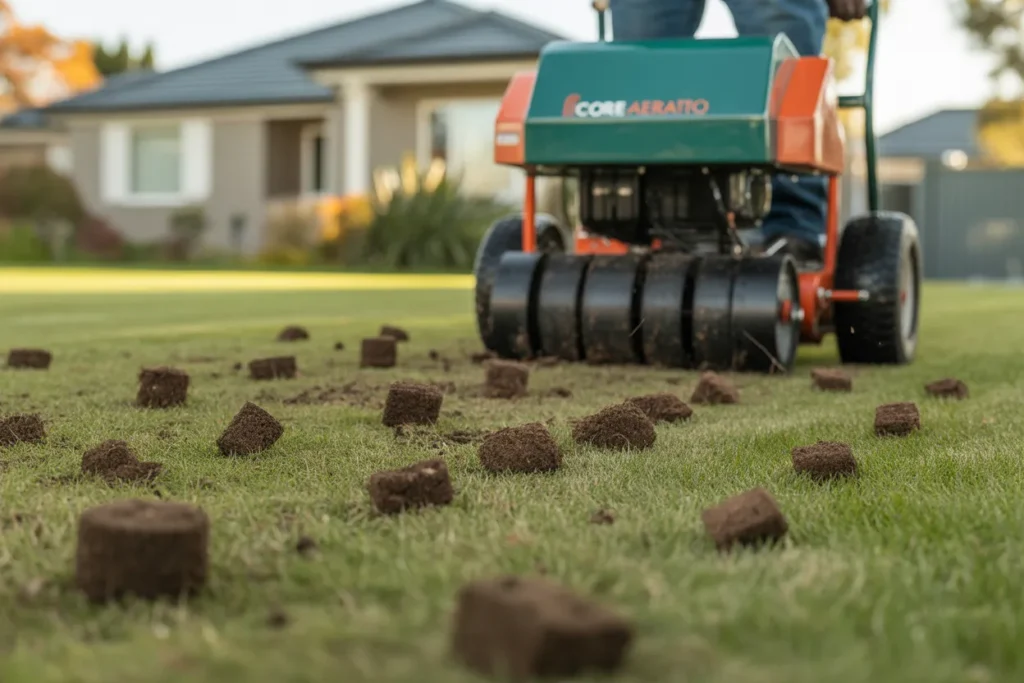
Lawn Aeration relieves soil compaction that accumulates through summer foot traffic and reduces water penetration. Core aeration – removing small soil plugs throughout the lawn – proves especially effective for Kapiti’s sandy soils prone to surface compaction despite overall free-draining characteristics. Professional aeration typically costs $150-$350 for average residential lawns (300-500 square metres), whilst DIY equipment rental runs $80-$120 daily.
Aeration benefits include improved water and nutrient penetration, enhanced root development encouraging drought tolerance, better oxygen availability to grass roots, and reduced thatch accumulation. For Kapiti lawns, aeration completed in early-mid autumn allows recovery before winter whilst preparing grass for spring growth.
Overseeding transforms thin, patchy lawns into dense turf before winter. Autumn’s warm soil and increasing moisture create perfect germination conditions, allowing new grass to establish before winter whilst avoiding spring weed competition. Ryegrass varieties suited to Kapiti’s climate include perennial ryegrass for high-traffic areas, fine fescue for shaded sections, and ryegrass/fescue blends for general purpose lawns.
Application rates vary by lawn condition: 15-20 grams per square metre for general improvement, 25-35 grams per square metre for significant renovation, and 35-50 grams per square metre for bare area establishment. Quality seed costs $8-$15 per kilogram, making DIY overseeding remarkably affordable for the transformation it delivers.
Top-Dressing and Levelling combined with aeration and overseeding produces exceptional results. Top-dressing – spreading 10-15mm of quality screened soil or sand/soil blend across lawns – fills minor depressions, improves soil quality, and provides perfect seedbed for overseeding. For Kapiti lawns, incorporating some organic matter into top-dressing mixes improves nutrient retention in sandy soils.
Professional lawn renovation combining aeration, overseeding, and top-dressing typically costs $800-$1,500 for average lawns, delivering results that transform lawn quality for years ahead.
Autumn Fertilisation Strategy
Autumn fertilisation using slow-release formulations strengthens grass roots whilst avoiding excessive top growth vulnerable to winter cold. Apply fertiliser in early-mid autumn (March-April) using formulations higher in potassium and phosphorus relative to nitrogen. This nutrient balance encourages root development and winter hardiness rather than lush top growth.
For Kapiti lawns, avoid high-nitrogen fertilisers after mid-April – they promote soft growth susceptible to fungal disease in wet winter conditions.
Soil Preparation and Garden Bed Renovation
Autumn offers ideal conditions for garden bed renovation and soil improvement that benefits plants throughout winter and into spring. Kapiti’s sandy coastal soils particularly benefit from autumn enrichment, replacing nutrients leached during summer whilst improving structure before winter rain.
Compost and Organic Matter Incorporation proves most effective in autumn when soil remains workable yet temperatures moderate decomposition rates. Generous compost addition – 50-75mm across garden beds worked into top 100-150mm of soil – improves nutrient retention, enhances moisture-holding capacity, and encourages beneficial soil organisms. For Kapiti gardens, well-aged compost or mushroom compost work excellently, whilst fresh manures should cure through winter before spring planting.
Quality compost costs $45-$85 per cubic metre delivered in bulk, making autumn soil improvement remarkably affordable. A typical garden bed (20-30 square metres) requires 1-1.5 cubic metres for generous 50mm application, representing $50-$130 investment delivering years of improved growing conditions.
Mulch Application protects soil and plant roots through winter whilst suppressing weeds and moderating soil temperature fluctuations. Autumn mulching proves particularly valuable for Kapiti gardens, where winter winds can dry surface soils even during wet periods. Effective mulch materials include bark chips (75-100mm depth) for longer-lasting coverage, pea straw (100-125mm) for vegetable gardens and annual beds, and compost (50-75mm) for enrichment alongside protection.
When mulching in autumn, ensure mulch sits away from plant stems and tree trunks (leave 50-100mm gap), apply generous depth for effective weed suppression and protection, and refresh or top up existing mulch that has decomposed through summer.
Garden Bed Edging and Definition completed in autumn prevents winter deterioration whilst creating crisp boundaries improving overall garden appearance. Options include natural stone for permanent, attractive edges ($30-$60 per linear metre installed), steel or aluminium edging for contemporary clean lines ($25-$45 per linear metre), timber sleepers for rustic charm and level changes ($40-$80 per linear metre), or brick/paver edging for formal gardens ($35-$65 per linear metre).
For Kapiti properties, consider wind exposure when selecting edging materials – lightweight options may require additional securing against winter storms.
Weed Management Before Winter
Autumn weed control prevents winter establishment and spring explosions. Remove existing weeds before they set seed, apply pre-emergent herbicides to prevent germination, and ensure mulch depth suppresses weed growth. For Kapiti gardens, particular attention to coastal weeds like inkweed, kikuyu grass (if not desired), and various broadleaf weeds pays dividends through reduced spring maintenance.
Retaining Walls and Hardscaping: Autumn Installation Advantages
Major hardscaping projects scheduled for autumn capitalise on dry ground conditions whilst avoiding summer heat and winter weather challenges. For Kapiti properties requiring retaining solutions, decking, or paving work, autumn timing delivers multiple advantages.
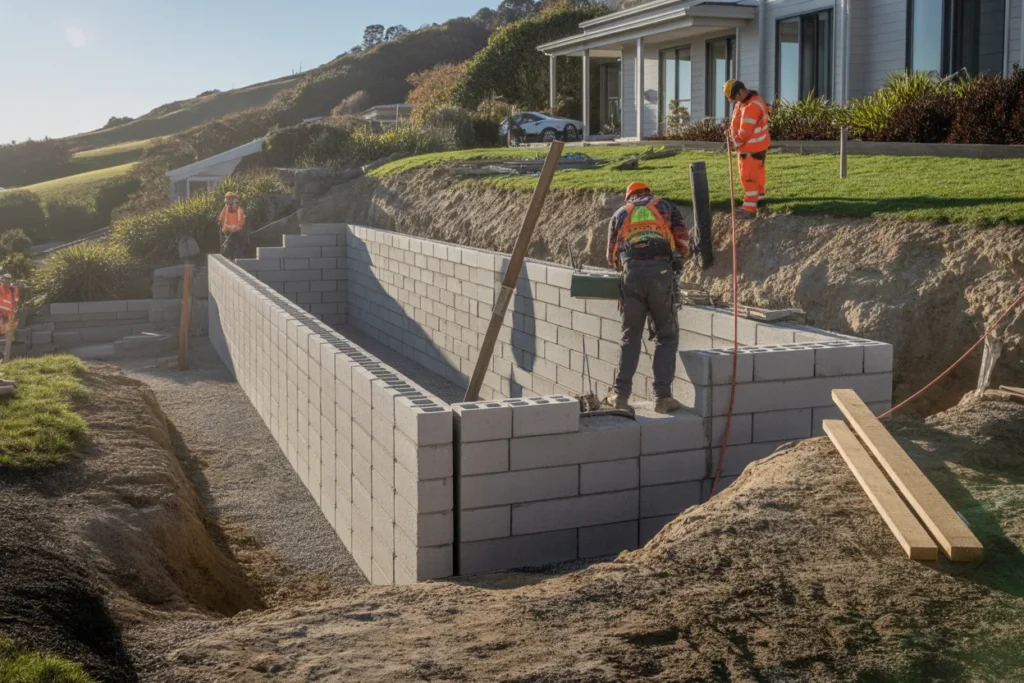
Retaining Wall Installation proceeds most efficiently during autumn’s mild, dry conditions. Excavation works smoothly in firm ground, concrete curing occurs reliably in moderate temperatures, and backfilling compacts properly without excessive moisture. These factors combine to produce superior construction outcomes compared to winter installation attempts.
For Kapiti’s sloping sections – common throughout Paraparaumu, Waikanae, and Raumati – retaining walls serve multiple purposes including creating usable flat areas for lawns or entertainment spaces, preventing erosion on steep slopes, managing drainage and preventing downhill water movement, and adding visual interest through terraced garden designs.
Autumn retaining wall costs remain consistent with annual averages: timber sleeper walls at $300-$450 per square metre, concrete block systems at $400-$650 per square metre, and natural stone installations at $600-$800 per square metre. However, contractor availability often improves during autumn’s quieter period, potentially offering scheduling flexibility unavailable during peak seasons.
Decking and Patio Construction also benefits from autumn scheduling. Dry conditions allow proper foundation preparation, timber installations avoid excessive summer heat expansion issues, and completion before winter provides immediate usability for year-round outdoor living. For Kapiti properties, quality decking withstands winter weather beautifully whilst providing protected outdoor space during marginal weather.
Autumn decking installation costs $350-$500 per square metre for treated pine, $600-$850 per square metre for hardwoods like Kwila, and $700-$1,000 per square metre for composite materials. These rates reflect year-round pricing, though autumn contractor availability may reduce lead times from booking to completion.
Paving and Pathway Projects complete efficiently in autumn before winter makes outdoor work unpleasant. Concrete paving, natural stone installation, and permeable paving systems all cure or settle properly in autumn’s moderate conditions. Additionally, completing pathways before winter reduces muddy traffic patterns that damage lawns and gardens during wet months.
Off-Peak Contractor Advantages
Whilst peak landscaping season (October-March) sees contractors booked 8-16 weeks ahead, autumn often provides 3-6 week lead times. This flexibility allows more responsive scheduling and potentially more personalised attention to your project. Furthermore, some contractors offer modest rate reductions (5-10%) for autumn/winter work, though quality established contractors like KHHS maintain consistent year-round pricing reflecting reliable service delivery.
Why Choose KHHS for Your Autumn Landscaping Projects

Since establishing KHHS in 2019, owner Hadyn James and our experienced team have completed hundreds of autumn landscaping projects across the Kapiti Coast. Our deep understanding of regional conditions, commitment to quality workmanship, and comprehensive service approach ensure your autumn preparation delivers lasting results through winter and beyond.
Registered Master Landscaper Accreditation in the Build category provides independent verification of our construction quality and professional standards. This accreditation, achieved through rigorous assessment of our completed work and business practices, means your autumn projects benefit from proven expertise rather than hoped-for promises. For Kapiti homeowners investing in drainage solutions, retaining walls, or hardscaping work, this professional accountability protects your investment through third-party oversight.
Local Expertise in Kapiti Conditions distinguishes our approach from contractors applying generic solutions to our unique environment. We understand which drainage systems perform reliably in coastal sandy soils, which plants establish successfully from autumn planting in exposed positions, and how to engineer structures withstanding Wellington’s winter winds and seismic activity. This knowledge, accumulated through years of Paraparaumu, Waikanae, and Kapiti Coast projects, prevents the costly mistakes resulting from inexperience with regional characteristics.
Comprehensive Autumn Services mean KHHS handles all aspects of your seasonal preparation. From initial site assessment identifying drainage issues and landscape opportunities, through detailed planning ensuring coordinated solutions rather than piecemeal fixes, to complete construction of retaining walls, hardscaping, and structures, professional installation of drainage systems addressing specific site challenges, strategic planting using species proven for Kapiti conditions, and soil preparation and mulching protecting gardens through winter – we manage everything comprehensively.
Engineering Excellence for Challenging Sites proves particularly valuable for Kapiti’s common sloping sections and exposed coastal properties. Our team doesn’t simply adapt standard designs – we engineer solutions specifically for your property’s topography, exposure, and soil conditions. This expertise ensures retaining walls remain structurally sound through decades of Wellington weather, drainage systems function reliably during winter’s heaviest rainfall, and structures withstand wind loads that destroy inadequately engineered installations.
Transparent Communication Throughout Autumn Projects builds trust and prevents misunderstandings. We provide detailed autumn task prioritisation based on your property’s specific needs and budget, realistic timeframes accounting for potential weather interruptions, itemised quotations clearly separating materials from labour costs, and regular progress updates with proactive communication about any issues requiring decisions. When challenges arise during construction – perhaps unexpected ground conditions or drainage complications – we address them professionally with solutions rather than excuses.
Off-Peak Availability and Scheduling Flexibility during autumn months means we can often accommodate projects with shorter lead times than peak summer schedules allow. Whilst we maintain consistent pricing year-round (reflecting reliable service regardless of season), autumn clients benefit from more flexible scheduling and potentially faster project commencement. This proves particularly valuable when drainage issues emerge during early autumn rains demanding relatively quick resolution.
Whether you’re addressing critical drainage problems before winter, leveraging autumn’s perfect planting conditions for landscape establishment, or completing hardscaping projects whilst weather permits, KHHS brings the technical expertise, professional standards, and local knowledge your Kapiti Coast property deserves.
Ready to Prepare Your Kapiti Property for Winter?
Autumn’s window for optimal landscape preparation closes quickly as winter conditions arrive. Proactive homeowners who address essential tasks now avoid winter damage whilst positioning their properties for spectacular spring results.
KHHS offers complimentary autumn site assessments evaluating your property’s drainage performance, identifying landscape opportunities suited to autumn timing, recommending task prioritisation based on urgency and budget, and providing realistic cost estimates for professional solutions. This assessment service, conducted without obligation, helps you understand which autumn tasks demand immediate professional attention versus which you might tackle independently or defer to future seasons.
Following site assessment, we develop detailed proposals incorporating drainage solutions engineered for your specific site conditions, hardscaping or retaining wall recommendations, strategic planting plans using proven Kapiti-suitable species, soil improvement and preparation services, and comprehensive cost breakdowns allowing informed decision-making.
Many autumn projects – particularly drainage improvements and hardscaping work – proceed more efficiently when scheduled promptly. Delaying beyond mid-May often means waiting until spring due to winter weather limitations, potentially allowing problems to worsen through winter whilst missing autumn’s perfect planting window entirely.
Contact KHHS today to discuss your autumn landscaping needs. Call Hadyn James directly at 027 566 5687 or email khhs.ltd@gmail.com to arrange your complimentary autumn site assessment. Visit our website at https://www.khhs.co.nz to explore our portfolio of completed Kapiti Coast projects and learn more about our comprehensive landscape services.
Don’t let winter arrive before your property is properly prepared – let’s tackle essential autumn tasks together.
Frequently Asked Questions About Autumn Landscaping on Kapiti Coast
What’s the single most important autumn landscaping task for Kapiti Coast properties?
Drainage assessment and improvement ranks as the critical autumn priority for most Kapiti properties. Our region’s combination of sandy coastal soils, winter rainfall averaging 150-250mm monthly, and common sloping sections creates drainage challenges that only become apparent once winter rains arrive. Addressing drainage during autumn’s drier conditions allows efficient installation whilst ground remains firm and workable, whereas winter attempts create muddy messes costing 30-50% more in labour whilst delivering inferior results. French drains, surface grading improvements, and stormwater system upgrades completed in autumn prevent waterlogged lawns, foundation damage, and erosion problems throughout winter. For properties experiencing even minor pooling or slow drainage during autumn rains, professional assessment now prevents significant winter damage. KHHS provides complimentary drainage assessments identifying specific issues and recommending appropriate solutions engineered for Kapiti’s coastal conditions.
Is autumn really better than spring for planting on the Kapiti Coast?
Absolutely – autumn planting delivers measurably superior results for most landscape plants in Kapiti’s coastal climate. The combination of warm soil (encouraging rapid root development), increasing rainfall (reducing irrigation requirements), and moderate temperatures (minimising transplant stress) creates establishment conditions spring cannot match. Research demonstrates autumn-planted natives establish 40-60% faster, require 30-50% less first-summer irrigation, and show superior drought tolerance in subsequent years compared to spring equivalents. This occurs because autumn-planted specimens develop extensive root systems throughout winter before supporting spring top growth, whereas spring-planted plants must simultaneously establish roots whilst supporting leaves and stems during increasing heat and decreasing moisture. For Kapiti gardeners, autumn planting proves particularly valuable for native trees and shrubs, hedging and privacy screens, fruit trees (bare-rooted stock from late April), and perennial garden plants. The only exceptions are frost-tender species and summer-flowering perennials, which prefer spring establishment. Overall, autumn represents Kapiti’s premier planting season for landscape investment.
How late in autumn can I complete major landscaping projects in Paraparaumu?
Timing depends significantly on specific project types and seasonal weather patterns. Generally, early-mid autumn (March through April) suits virtually all projects including earthworks, retaining walls, major hardscaping, and extensive planting programmes. Late autumn (May) remains viable for projects avoiding extensive excavation – such as decking construction, pergola installation, planting programmes, and garden bed preparation – though increased rainfall may occasionally interrupt work schedules. Beyond late May, winter conditions increasingly compromise efficiency and outcomes for projects requiring excavation, concrete work, or extensive ground disturbance. However, winter suits certain projects admirably, particularly hardscaping work, timber structures like decks and pergolas, and planning/design for spring implementation. For Kapiti homeowners considering autumn projects, consultation with experienced contractors like KHHS by mid-April ensures adequate scheduling flexibility. Delaying decisions until May often means either rushed implementation before winter or deferring until spring when contractor availability tightens considerably. Therefore, autumn planning initiated in March provides optimal flexibility for current-season completion or thoughtful spring scheduling.
Should I tackle autumn landscaping tasks myself or hire professionals?
This decision depends on task complexity, available time, physical capability, and desired quality outcomes. DIY-suitable autumn tasks include mulch application and garden bed preparation, lawn overseeding and fertilisation, minor weed control and debris clearing, simple plant installation following professional advice, and maintenance tasks like gutter cleaning and tidying. These require modest skill, standard tools, and primarily time commitment. However, professional services prove cost-effective for drainage system design and installation (DIY attempts often fail through improper grading or sizing), retaining wall construction exceeding 600mm height (requiring engineering for Kapiti wind loads), extensive hardscaping projects (professional equipment produces superior, faster results), large-scale plant installations (professionals source quality stock and ensure proper establishment), and soil grading affecting water flow (mistakes create expensive problems). For Kapiti properties, our challenging conditions – coastal exposure, sandy soils, common slopes, and seismic requirements – increase the value of professional expertise. Many homeowners adopt hybrid approaches, handling straightforward tasks independently whilst engaging professionals for technical work requiring specialised knowledge or equipment. KHHS offers consultations helping homeowners understand which aspects suit DIY efforts versus which benefit from professional service, ensuring efficient resource allocation.
How much should I budget for comprehensive autumn landscape preparation?
Autumn preparation costs vary enormously based on property size, existing conditions, and scope of improvements required. For typical Kapiti residential properties (600-800 square metres), basic autumn preparation including professional lawn renovation (aeration, overseeding, fertilisation) costs $800-$1,500, garden bed preparation with compost and mulch runs $600-$1,200, and minor drainage improvements like channel drains or minor grading add $500-$1,500. Comprehensive autumn programmes addressing multiple needs typically range $2,500-$5,000 for properties requiring moderate intervention. However, properties with significant drainage issues, major retaining wall requirements, or extensive hardscaping projects can easily require $15,000-$40,000 investments. The key lies in prioritising essential tasks preventing winter damage (drainage, structural work) over cosmetic improvements that can defer to future seasons. Professional assessment helps identify critical versus discretionary spending, allowing budget allocation delivering maximum protection and value. Many Kapiti homeowners adopt phased approaches, addressing urgent drainage and structural needs during initial autumn whilst deferring planting and refinement tasks to subsequent seasons. KHHS provides detailed quotations separating essential from optional work, enabling informed decisions matching available budget with realistic outcomes.
What happens if I don’t complete autumn preparation before winter arrives?
Deferring essential autumn tasks creates multiple consequences ranging from inconvenient to expensive. Properties with inadequate drainage face waterlogged lawns (requiring expensive renovation), erosion damage on slopes (necessitating costly repairs), foundation or structure water damage (potentially $10,000-$50,000+ repairs), and garden bed flooding killing established plants. Missed autumn planting opportunities mean 6-12 month delays before landscape plants reach equivalent establishment (spring-planted specimens lag autumn equivalents significantly), lost growing seasons for productive gardens or hedging, and increased first-summer irrigation costs for spring plantings. Deferred hardscaping and structural work leads to winter weather delays extending project timelines, muddy working conditions increasing labour costs 20-40%, and spring contractor availability constraints (quality professionals book 3-4 months ahead). Additionally, neglected lawn renovation results in continued thin, weedy turf through another growing season, whilst skipped soil preparation means depleted garden beds struggling through winter into spring. Whilst not every autumn task proves absolutely critical, strategic preparation prevents problems whilst capitalising on seasonal advantages. For Kapiti properties, our challenging winter conditions punish procrastination more severely than milder regions where seasonal transitions proceed gradually. Therefore, autumn investment in essential preparation proves remarkably cost-effective compared to reactive winter emergency repairs or lost opportunities.
Source Links
Autumn Planting Benefits – Registered Master Landscapers New Zealand – https://masterlandscapers.org.nz/
Kāpiti Coast District Council Building and Drainage Consents – https://www.kapiticoast.govt.nz/services/building-and-resource-consents/
Seasonal Garden Care – Ministry for Primary Industries NZ – https://www.mpi.govt.nz/
Native Plant Selection – New Zealand Plant Conservation Network – https://www.nzpcn.org.nz/
Lawn Care Guidelines – New Zealand Sports Turf Institute – https://nzsti.org.nz/
Soil Improvement Standards – Landcare Research New Zealand – https://www.landcareresearch.co.nz/
Drainage Design Standards – Standards New Zealand – https://www.standards.govt.nz/
Coastal Landscaping Guidelines – New Zealand Coastal Society – https://www.coastalsociety.org.nz/
Weather Patterns and Climate – MetService New Zealand – https://www.metservice.com/
Retaining Wall Engineering – Building Performance New Zealand – https://www.building.govt.nz/
Landscape Industry Standards – Registered Master Landscapers – https://masterlandscapers.org.nz/
Autumn Gardening Tasks – NZ Gardener Magazine – https://www.nzgardener.co.nz/
About KHHS (Kapiti Hardscaping & Horticultural Services)
Since 2019, KHHS has specialised in landscape construction and outdoor transformations across the Kapiti Coast and Greater Wellington region. Our Registered Master Landscaper accreditation, professional expertise, and deep understanding of coastal conditions ensure your autumn preparation delivers results withstanding winter’s challenges whilst setting the stage for spring success. “Transforming Ordinary into Extraordinary” reflects our commitment to every Paraparaumu, Waikanae, and Kapiti Coast property we enhance.